

 Facebook
 X
 Pinterest
 Copy Link
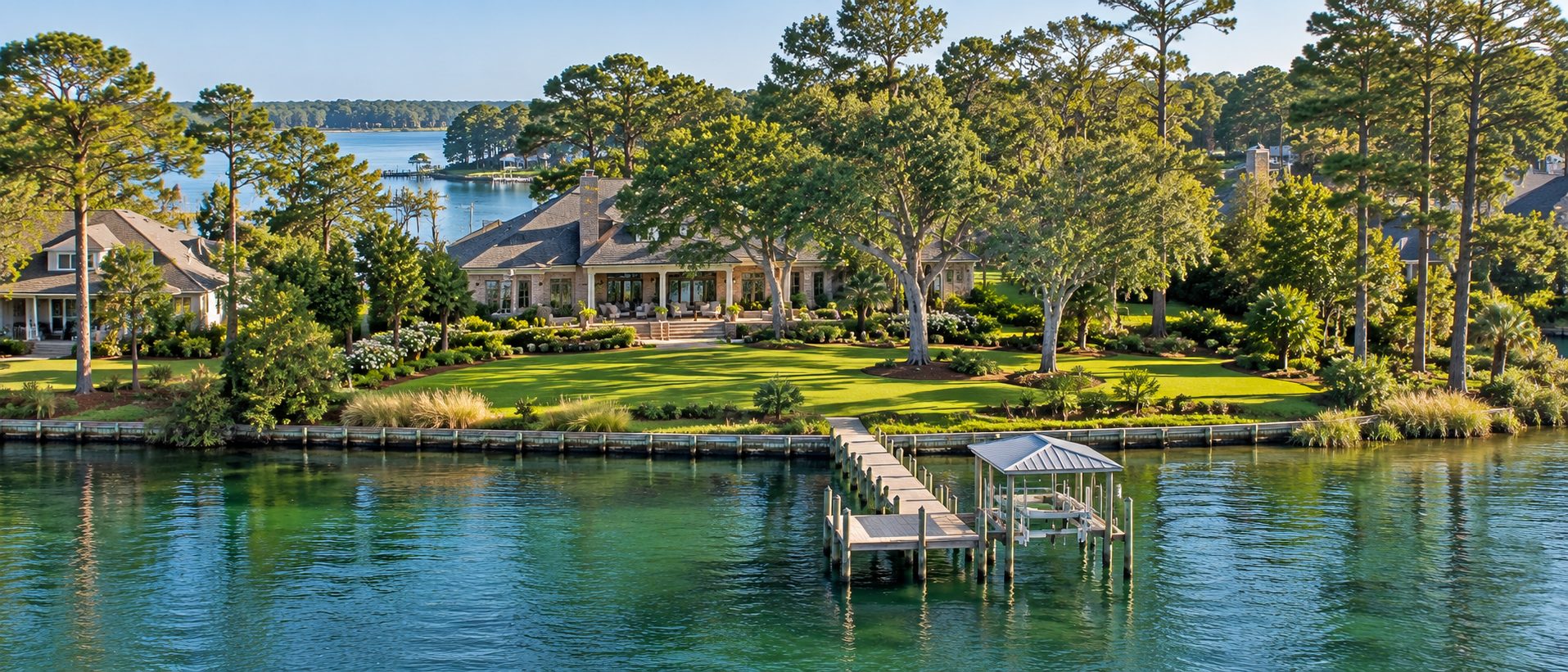
Why the view is only one part of understanding waterfront real estate value.
Two waterfront homes can sit along the same stretch of water, have similar square footage, and appear to offer much the same lifestyle.
Yet their market values may be quite different.
That can be surprising to homeowners who have watched nearby properties sell and wondered how those prices relate to their own homes.
But waterfront real estate has always required looking beyond the obvious.
The house matters, of course. So does its condition, layout, age, and location. But when you’re evaluating waterfront property, you’re also evaluating the land, the shoreline, the water itself, and how all those elements work together.
After years of working with waterfront properties around Fort Walton Beach, Shalimar, Niceville, and Destin, I’ve learned that some of the most important differences aren’t necessarily the ones you notice first.
The View Is Important. But What Kind of View?
A beautiful water view can certainly influence what buyers are willing to pay.
But not all views offer the same experience.
One property may look across a broad expanse of Choctawhatchee Bay. Another may overlook a quiet, protected bayou. A third may offer a narrower view framed by mature trees and neighboring shorelines.
Each has its own appeal.
The orientation of the house matters, too. Where are the main living areas? How much of the water can you see from inside? Does the porch take advantage of the view? Is the view open, partially obstructed, or likely to change?
Sometimes a home with less waterfront footage offers a more enjoyable view because of how the house sits on the property.
That’s why evaluating waterfront value requires more than measuring the shoreline.
Water Access Can Change the Equation
For some buyers, the view is the primary attraction.
For others, it’s the ability to get out on the water.
And that difference can have a significant influence on how a property is valued by its likely buyers.
A home with adequate depth for a particular boat, convenient access to navigable water, and a well-positioned dock may be especially desirable to someone who enjoys boating.
Another property may have an equally beautiful setting but more limited practical access.
Water depth, tidal conditions, channels, bridges, and the route to larger waterways can all affect usefulness.
That doesn’t mean the property with the best boating access will always command the highest price.
It means the value of waterfront features depends partly on what buyers want to do with them.
In my earlier article, Buying Waterfront Property in Northwest Florida: Look Beyond the View, I explained why buyers need to understand the waterfront itself before making a purchase.
Those same considerations become important when it’s time to evaluate what a waterfront home may be worth.
The Shoreline and Lot Matter More Than Many People Realize
Two properties with similar water frontage can have very different lot characteristics.
One may have a broad, gently sloping lawn leading toward a well-maintained seawall.
Another may have a steeper grade, more limited usable outdoor space, or a natural shoreline that requires a different approach to maintenance and access.
Elevation, drainage, lot configuration, and the relationship between the house and water can all influence a property’s usefulness and appeal.
In our established waterfront neighborhoods, mature live oaks, privacy, and generous setbacks can also contribute to what makes a property desirable.
But those features need to be evaluated in context.
A larger waterfront lot isn’t automatically more valuable simply because it has more land. How that land can be used, maintained, and enjoyed matters.
Docks, Lifts, and Waterfront Improvements Deserve a Closer Look
A private dock can be a wonderful feature.
So can a boat lift, covered slip, seawall, or thoughtfully designed outdoor living area.
But having those improvements isn’t the same as knowing their condition or contribution to market value.
An older dock that needs significant repairs may not offer the same value as one that’s well maintained and suitable for the next owner’s needs.
The same applies to seawalls and other shoreline improvements.
Age, condition, permitted status, and potential maintenance responsibilities all deserve consideration.
When evaluating waterfront property, I want homeowners to understand both the benefits of these features and the responsibilities that may come with them.
A waterfront improvement may be valuable without adding its full original construction cost to the home’s market value.
That’s an important distinction when deciding whether to repair, replace, or add something before selling.
The House Still Has to Work
Sometimes the water gets so much attention that the house itself becomes secondary.
But buyers are still purchasing a home.
They care about floor plans, condition, natural light, maintenance, storage, and whether the rooms support the way they want to live.
In Fort Walton Beach, Shalimar, and Niceville, many desirable waterfront homes are traditional brick or stone properties in established neighborhoods.
They may not look like the newer coastal homes found in some other parts of the Emerald Coast.
And they don’t need to.
A well-maintained traditional home with a functional layout, mature landscaping, and a strong relationship to the waterfront can have tremendous appeal.
What matters is understanding how the house and waterfront complement each other.
Why Waterfront Comparisons Require More Thought
When homeowners want to understand what their property is worth, it’s natural to look at nearby sales.
That’s a useful starting point.
But waterfront properties can be particularly difficult to compare.
Two homes may have similar square footage and sell within months of each other, yet differ in water depth, shoreline condition, dock facilities, exposure, lot configuration, or the quality of their views.
Those differences may affect what buyers are willing to pay.
Even price per square foot can tell an incomplete story when so much of a property’s appeal comes from characteristics outside the house.
This is why I believe understanding your home’s value should involve more than accepting an automated estimate or comparing a handful of nearby sales.
I’ve written about why knowing your home’s value matters even when you’re not planning to sell. For waterfront homeowners, that understanding can be especially useful because the property may have characteristics that aren’t easily reflected in an online estimate.
Good information helps homeowners make better decisions about maintenance, improvements, future plans, and eventually selling.
Improvements Should Be Considered With the Market in Mind
Waterfront homeowners often invest significantly in their properties over the years.
A new dock. A boat lift. Landscaping. Outdoor living areas. Shoreline improvements. Interior renovations.
Some of those investments may improve market appeal or value. Others may be more about personal enjoyment.
And there’s nothing wrong with that.
If you’re planning to stay in your home for years, an improvement that makes waterfront living more enjoyable may be worthwhile regardless of how much it adds to resale value.
But if you’re considering selling, the conversation changes.
Then we need to consider what buyers in your particular market are likely to value, what the improvements will cost, and whether the work makes financial sense.
This is one reason I encourage homeowners to begin preparing long before they’re ready to sell.
Early conversations give us time to evaluate improvements rather than making expensive decisions under pressure.
Understanding Value Is About Understanding the Whole Property
One of the things I appreciate about working with waterfront real estate is that every property has its own character.
The view may draw your attention first.
But the deeper value often comes from how everything works together.
The home.
The lot.
The shoreline.
The dock.
The water access.
The neighborhood.
And the experience of living there.
Understanding those relationships helps buyers recognize what makes a property special. It also helps homeowners understand how their property may compare with others when the time comes to sell.
Taking the Long View
Your waterfront home is more than its square footage, and its value is more than the view.
If you’ve owned your property for years, you may know its best qualities better than anyone.
You know where the afternoon shade falls. How the water changes with the seasons. Which parts of the yard you use most. What it’s like to live there every day.
Those details are part of the property’s story.
Understanding which ones matter to today’s buyers—and how they influence market value—is where experience and thoughtful analysis become important.
You don’t have to be ready to sell to begin that conversation.
Sometimes simply understanding what makes your property different is the first step toward making a better decision whenever the time comes.
