

 Facebook
 X
X
 Pinterest
 Copy Link
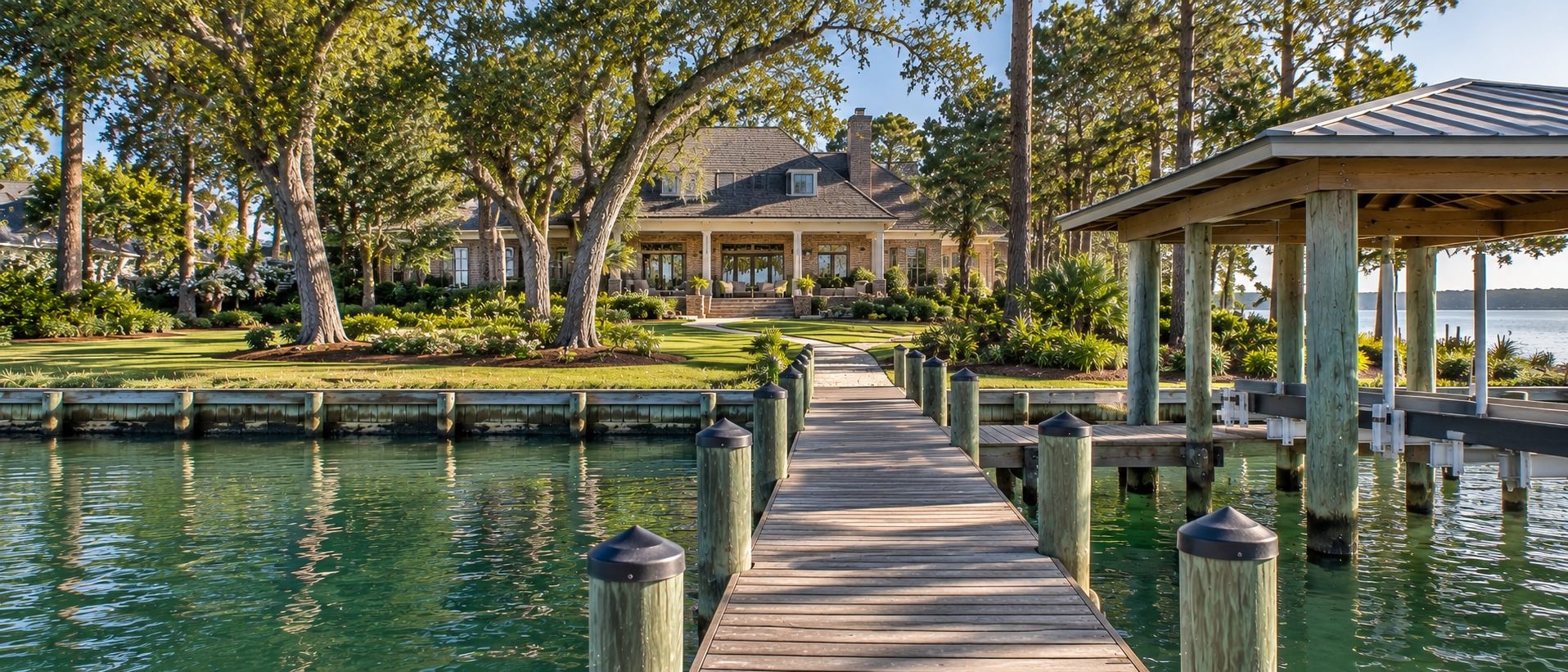
There is something about walking into a waterfront home and seeing the water for the first time. It’s easy to imagine morning coffee on the porch, evenings by the bay, or walking out the back door and getting on the boat.
And those things matter. They’re often exactly why someone wants to live on the water.
But when I help buyers look at waterfront property, I encourage them to enjoy the view—and then start looking beyond it.
Because with waterfront real estate, you’re not simply buying a house with water behind it.
The waterfront itself is part of the property you’re choosing.
And two homes with equally beautiful views can offer very different experiences once you live there.
Start With How You Want to Use the Water
Before getting caught up in a particular house, I think it’s helpful to ask a simple question:
What do you picture yourself doing here?
For one buyer, waterfront living means keeping a boat behind the house and being able to get out on the water easily.
Another may care much more about a quiet view, watching wildlife and enjoying the porch.
Someone else may want kayaking or paddleboarding right from the backyard.
And another buyer may simply want the openness and privacy that comes from having water behind the home instead of another house.
Those are all good reasons to buy waterfront property.
But they don’t necessarily lead to the same property.
This is one of those situations where the best real estate decisions often start long before the move—by understanding what you actually want your day-to-day life to look like.
Bay, Bayou and Other Waterfront Settings Aren’t Interchangeable
Around Fort Walton Beach, Shalimar, Niceville and Destin, waterfront living takes many forms.
A home tucked along a protected bayou can offer a very different setting from a property facing a broader stretch of bay. Other properties may provide access through canals or smaller waterways that eventually connect to larger bodies of water.
None is automatically better than another.
They’re simply different.
A more protected location may appeal to someone who values quiet water and shelter. Broader water can provide expansive views and a different sense of openness. For a boater, the route from the property to the places they use most may matter just as much as what they see from the backyard.
That’s why I don’t think “waterfront” tells you nearly enough about a property.
You have to understand which water—and how it works for you.
If You Own a Boat, Look at More Than the Dock
A beautiful dock doesn’t necessarily tell you whether a property works for your boat.
Water depth matters. So can tides, the route to deeper water, bridges, nearby channels and the configuration and condition of existing dock improvements.
And those details can vary considerably from one waterfront property to another.
If boating is an important part of why you’re buying, these aren’t questions to save until after you’ve fallen in love with the house.
They’re part of deciding whether the property belongs on your list in the first place.
Depending on the property and your plans, that may mean gathering information from surveys, local records or appropriate marine and waterfront professionals rather than making assumptions based on what you see during a showing.
Look at the Shoreline, Too
Buyers naturally look outward toward the water.
I also encourage them to look down.
How does the property actually meet the water?
Is there a seawall or another form of shoreline stabilization? What condition is it in? Is the shoreline natural? How does the elevation of the homesite relate to the water?
Those characteristics can affect both enjoyment and future responsibilities.
The same applies to docks, lifts, seawalls and other waterfront improvements. They may add tremendous usefulness to a property, but they’re also physical improvements that need to be understood and maintained.
A waterfront purchase deserves a good look at all of those pieces—not just the house.
Think About Exposure and Everyday Living
One thing that’s easy to miss during a showing is how the property will feel at different times of day and in different conditions.
Which direction does the home face?
Where will the afternoon sun fall?
How exposed is the property to wind and weather?
Is the water typically active or quiet?
What kind of boat traffic is nearby?
Some of these things sound small compared with bedrooms, kitchens and square footage.
But once you live on the water, they can become part of everyday life.
That’s one reason I like to think about a property beyond the showing itself. You’re not only choosing what the home looks like for an hour.
You’re choosing how it lives.
Waterfront Ownership Comes With Different Questions
Waterfront property can also bring considerations that aren’t as prominent with an inland home.
Insurance is an obvious one, particularly here in Northwest Florida. Flood zones, elevation and the characteristics of the individual property can all matter.
Waterfront improvements may also involve permitting or other requirements, particularly if you’re thinking about changing a dock, seawall or shoreline area.
A real estate agent shouldn’t take the place of an insurance professional, surveyor, marine contractor or other specialist.
But an experienced agent should know when the right questions need to be asked.
That’s an important distinction.
My role isn’t to have every technical answer. It’s to help make sure important questions don’t get overlooked while everyone is admiring the view.
Don’t Forget the House
Interestingly, waterfront buyers can sometimes become so focused on the water that the house itself gets less scrutiny.
The same fundamentals still matter.
Condition. Layout. Maintenance. Improvements. Location. Resale considerations. Whether the home fits the way you actually live.
And with many of our established waterfront neighborhoods, buyers aren’t necessarily choosing newly built or trendy coastal architecture. There are beautiful brick, stone and traditionally styled homes that have occupied these shorelines for decades.
Part of the decision is understanding the whole property—the home, the land and the waterfront together.
For buyers beginning that process, exploring Northwest Florida communities before narrowing the home search can also help clarify which locations fit the lifestyle you’re looking for.
Value Goes Beyond the View
Waterfront values can be particularly interesting because properties that appear similar on paper may have meaningful differences once you look more closely.
The quality and orientation of the view, water access, lot characteristics, dock facilities, shoreline improvements and the home’s relationship to the water can all influence how buyers perceive a property.
That’s one reason automated estimates and broad price-per-square-foot comparisons can only tell part of the story.
I’ve written before about why it’s useful to know your home’s value even when you’re not planning to sell. Waterfront property is a particularly good example of why understanding the individual property matters.
Taking the Long View on Waterfront
Buying waterfront property should be exciting.
You should stand on the porch and enjoy the view.
You should picture the mornings, the boats, the sunsets, the family gatherings and all the reasons you wanted to live near the water in the first place.
Then take another look.
Look at the water. Look at the shoreline. Look at the dock. Think about access, exposure, maintenance and how you’ll actually use the property.
And make sure the lifestyle you’re imagining matches the waterfront you’re buying.
A beautiful view can make you fall in love with a property.
Understanding everything beyond that view is what helps you make a decision you’ll still feel good about years from now.
